Is Blue Light Really Ruining Your Sleep? The Science of Screen Time and Circadian Rhythm
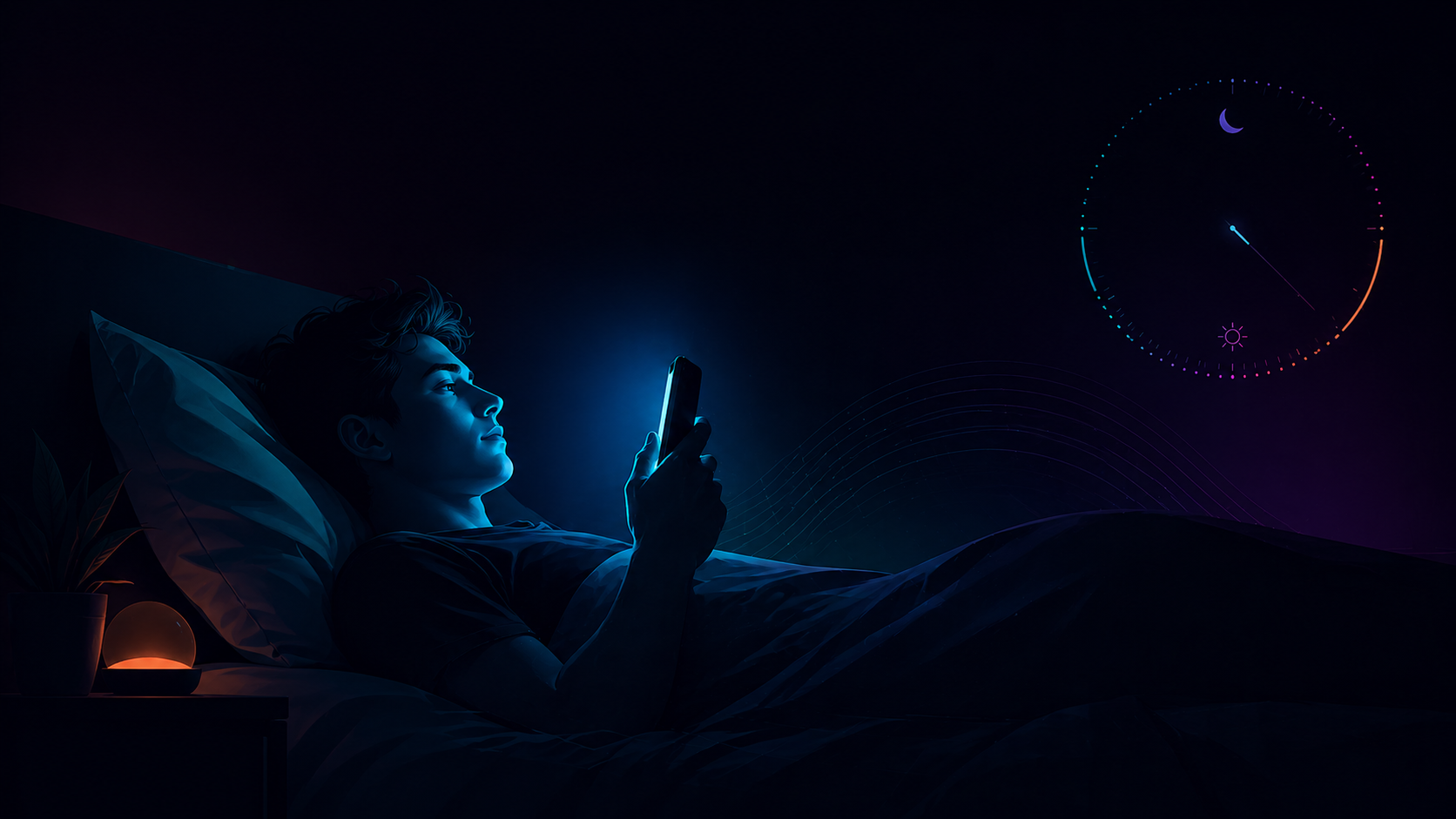
April 27, 2026 · DEEP Team · 6 min read
The Science of Blue Light and Sleep: What You Need to Know
You’ve probably heard it a thousand times: stop scrolling before bed, blue light is bad for sleep. But how much of that is science versus speculation? In this post, we’ll cut through the noise, look at the actual research, and give you a practical blueprint for protecting your sleep without throwing your phone into the ocean.
How Does Blue Light Disrupt Your Circadian Rhythm?
Blue light, particularly in the 460–480 nm wavelength range, suppresses melatonin production more than any other color of light, tricking your brain into thinking it’s still daytime.
Your circadian rhythm—the internal 24-hour clock governing sleep-wake cycles—is primarily regulated by light exposure. Specialized cells in your retina (intrinsically photosensitive retinal ganglion cells) contain melanopsin, a photopigment maximally sensitive to blue light. When these cells detect blue light, they signal the suprachiasmatic nucleus (SCN) in the brain to suppress melatonin, the hormone that induces sleepiness.
A landmark study by Gooley et al. (2011) in the Journal of Clinical Endocrinology & Metabolism demonstrated that exposure to room light (200 lux) during the late evening suppressed melatonin by approximately 85%, with blue light being the primary driver. Even dim light from a tablet (40 lux) can delay melatonin onset by 1.5 hours, as shown by Chang et al. (2015) in PNAS.
| Light Exposure | Melatonin Suppression | Sleep Onset Delay |
|---|---|---|
| Bright room light (200 lux) | ~85% | 90–120 minutes |
| Tablet screen (40 lux) | ~23% | 60–90 minutes |
| Smartphone (20 lux) | ~15% | 30–60 minutes |
| Blue-blocking glasses + screen | ~5% | ~10 minutes |
Actionable tip: Dim your screens 2–3 hours before bed. If you must use devices, enable night mode (warmer color temperature) and reduce brightness to the lowest comfortable level.
Does Blue Light Affect More Than Just Sleep Onset?
Yes, chronic evening blue light exposure degrades sleep quality, deep sleep (N3), and next-day recovery, even if you fall asleep at the same time.
A 2019 study in Sleep Health by Figueiro et al. found that participants who wore blue-blocking glasses for three hours before bed experienced a 58% increase in melatonin levels compared to controls. But more importantly, their sleep efficiency improved, and they reported feeling more rested the next day.
Even if you manage to fall asleep, blue light exposure can fragment your sleep architecture. Research from Chronobiology International (2016) showed that blue light exposure before bed reduces slow-wave sleep (the most restorative stage) by up to 20%. That means less growth hormone release, less muscle repair, and poorer cognitive recovery.
Actionable tip: Invest in blue-blocking glasses for evening use. Look for ones that block 99% of blue light in the 400–500 nm range. Wear them from sunset until you go to bed.
Can Blue Light Exposure Impact Your Fitness Recovery?
Absolutely. Poor sleep from blue light directly impairs muscle protein synthesis, glycogen replenishment, and next-day performance.
Sleep is when your body repairs muscle tissue, restores glycogen stores, and balances hormones like cortisol and testosterone. Blue light-induced sleep disruption can lower testosterone by up to 15% after just one week of poor sleep, according to a study by Leproult & Van Cauter (2011) in JAMA.
Moreover, a 2020 meta-analysis in Sports Medicine found that athletes who experienced sleep deprivation (even partial) had a 10–20% decrease in strength, endurance, and reaction time. Blue light exposure before bed is a direct contributor to that sleep debt.
Actionable tip: Use DEEP app's sleep tracking to monitor your sleep duration and quality. After a night of poor sleep, adjust your workout intensity or schedule a lighter recovery session. The app’s AI health coach can suggest optimal training loads based on your sleep data.
How Much Blue Light Is Actually Harmful?
The harmful dose depends on timing, intensity, and duration. Even 30 minutes of screen time in the hour before bed can measurably suppress melatonin.
Research by Cajochen et al. (2011) in Journal of Applied Physiology showed that just one hour of tablet use before bed reduced melatonin by 23% and increased alertness. The effect is cumulative: longer exposure leads to greater suppression.
| Screen Time Before Bed | Melatonin Suppression | Sleep Quality Impact |
|---|---|---|
| 0 minutes | Baseline | Optimal |
| 30 minutes | ~15% | Mild disruption |
| 1 hour | ~23% | Moderate disruption |
| 2 hours | ~35% | Significant disruption |
Actionable tip: Create a "digital sunset" routine. Set a timer on your phone to automatically switch to night mode at sunset. Better yet, charge your phone in another room and use an old-school alarm clock.
Are Blue Light Filters and Night Mode Effective?
Yes, but they are not a complete solution. Built-in night modes reduce blue light by 30–60%, which helps but doesn’t eliminate the problem.
A study by Altangerel et al. (2021) in Ophthalmic and Physiological Optics tested iPhone Night Shift mode and found it reduced blue light emission by 30–40%. However, when combined with reduced brightness (below 50%), melatonin suppression was cut by half compared to full-brightness standard mode.
Blue-blocking glasses are more effective, blocking 90–99% of blue light. However, they only work if you wear them consistently. A 2019 randomized controlled trial in Journal of Psychiatric Research found that blue-blocking glasses improved sleep quality and reduced depressive symptoms in insomniacs.
Actionable tip: Combine both strategies: use night mode on all devices AND wear blue-blocking glasses after sunset. DEEP app’s barcode scanner can even help you log supplements like melatonin or magnesium glycinate if you choose to use them (always consult a doctor first).
What About Blue Light in the Morning? Is It Good for You?
Morning blue light exposure is beneficial—it helps reset your circadian rhythm, boosts alertness, and improves mood.
Your body uses blue light as a signal to wake up. Morning sunlight is rich in blue light, and exposure within 30–60 minutes of waking strengthens your circadian rhythm, making it easier to fall asleep at night. A 2017 study in Sleep Medicine Reviews concluded that morning light therapy (10,000 lux) improved sleep onset latency and reduced morning sleepiness.
Actionable tip: Get outside for 10–15 minutes in the morning, even on cloudy days. If you live in a dark climate, consider a light therapy lamp (10,000 lux) placed 16–24 inches from your face for 30 minutes after waking.
How Can You Protect Your Sleep from Blue Light Without Quitting Technology?
Use a layered approach: reduce evening screen time, use night mode, wear blue-blocking glasses, and prioritize morning light exposure.
Here’s a simple 4-step protocol:
- Morning (6–10 AM): Get 15 minutes of morning sunlight. Use DEEP app to log your wake time and track sleep consistency.
- Afternoon (10 AM – 4 PM): Normal screen use. No restrictions needed.
- Evening (4 PM – sunset): Start dimming indoor lights. Use warm, dimmable bulbs (2700K).
- Night (sunset – bed): Wear blue-blocking glasses, enable night mode on all devices, and avoid screens 1 hour before bed. Use DEEP app’s sleep tracker to see how these changes affect your sleep score over time.
The Bottom Line: Blue Light and Sleep
Blue light is a double-edged sword. In the morning, it’s your best friend for alertness and circadian alignment. At night, it’s a saboteur of melatonin, sleep quality, and recovery. The science is clear: reducing blue light exposure in the evening improves sleep duration, sleep quality, and next-day performance—including your workouts.
You don’t need to go off-grid. Small, consistent changes—like using night mode, dimming lights, and wearing blue-blocking glasses—can dramatically improve your recovery. And with DEEP app, you can track your sleep, log your nutrition, and let the AI coach guide you toward better habits.
Ready to optimize your recovery? DEEP is free on the App Store. Download it today and start sleeping smarter.