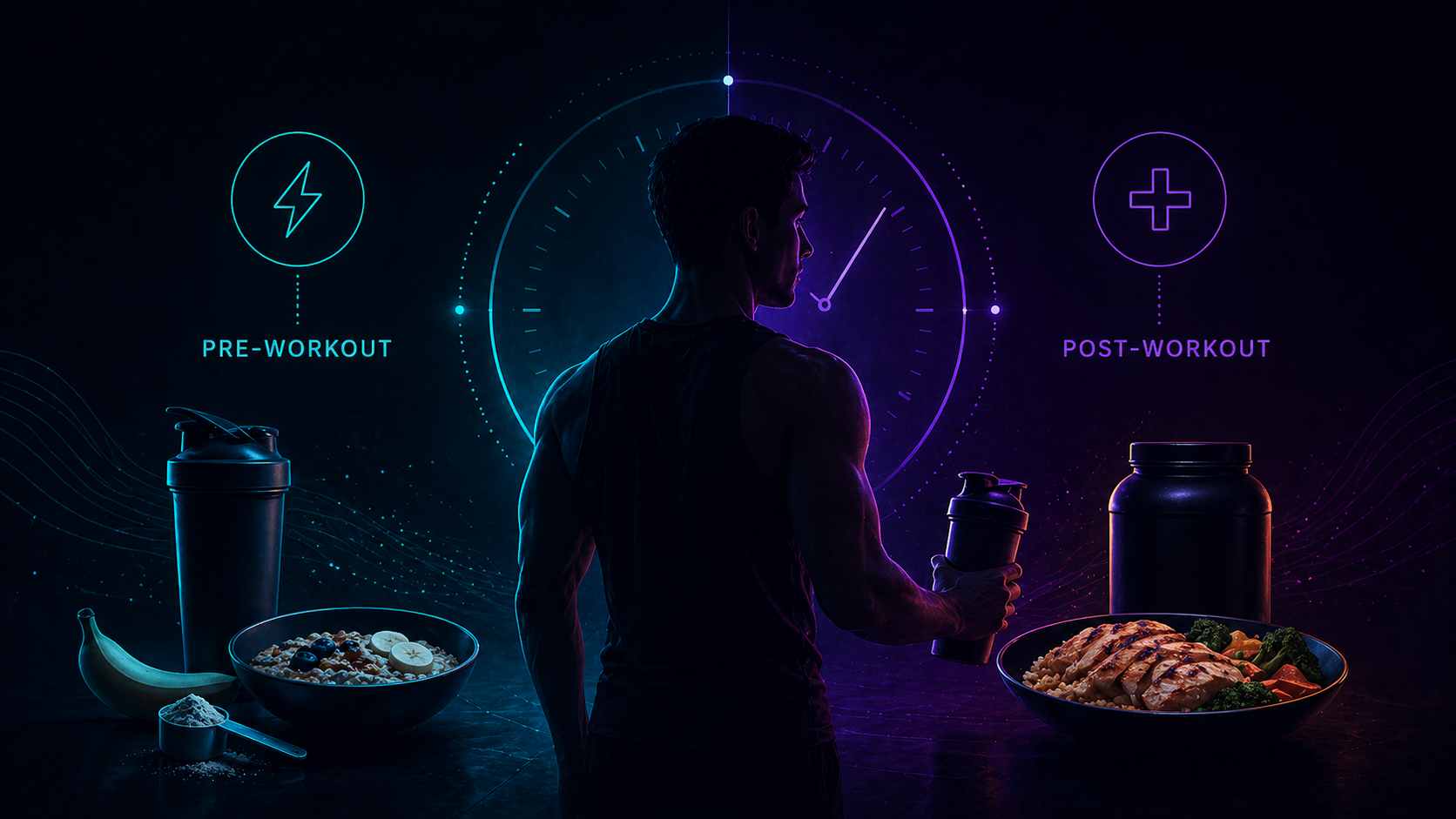
Pre-Workout vs. Post-Workout Nutrition: What Does the Science Say About Timing?
April 27, 2026 · DEEP Team · 5 min read
What Is the Anabolic Window and Does It Really Matter?
The anabolic window—the period immediately after exercise when nutrient timing supposedly matters most—is real but far wider than once thought, with muscle protein synthesis (MPS) remaining elevated for 24–48 hours post-workout.
The concept of a narrow “anabolic window” of 30–60 minutes after training became popular in bodybuilding circles. However, a landmark review by Schoenfeld et al. (2013) in the Journal of the International Society of Sports Nutrition found that the window is actually quite flexible. While consuming protein and carbs soon after exercise can enhance recovery, total daily protein intake matters far more than precise timing. For most people, eating a balanced meal within 2–3 hours before or after training is sufficient.
Practical takeaway: Don’t stress about a 30-minute deadline. Focus on hitting your daily protein target (1.6–2.2 g/kg body weight) and eating a meal with protein and carbs within a few hours of your workout.
What Should You Eat Before a Workout for Maximum Energy?
A pre-workout meal should be rich in complex carbohydrates and moderate in protein, eaten 1–3 hours before exercise, to top off glycogen stores and stabilize blood sugar.
Research published in Nutrients (2018) by Hargreaves et al. shows that carbohydrate availability directly impacts high-intensity exercise performance. For example, consuming 1–4 g/kg of body weight of carbs in the 1–4 hours before exercise can improve endurance and strength. Adding 15–25 grams of protein can further reduce muscle breakdown during training.
Example pre-workout meals (2–3 hours before):
- Oatmeal with berries and a scoop of protein powder
- Whole-grain toast with peanut butter and banana
- Greek yogurt with granola and honey
If you’re short on time (30–60 minutes before):
- A banana or apple
- A small smoothie with fruit and protein
- Rice cakes with nut butter
DEEP’s AI health coach can help you calculate your exact pre-workout calorie needs based on your workout type and goals—just log your meal in the nutrition tracker.
How Does Protein Timing Affect Muscle Growth and Recovery?
Consuming 20–40 grams of high-quality protein (0.4–0.5 g/kg body weight) within two hours after training optimizes muscle protein synthesis, but the total daily protein intake is the primary driver of muscle growth.
A 2017 meta-analysis by Morton et al. in the British Journal of Sports Medicine concluded that protein supplementation significantly enhances muscle mass and strength gains when combined with resistance training, but the timing effect is small. More important is distributing protein evenly across 3–4 meals (20–40 g each) throughout the day.
Quick reference: Post-workout protein sources
| Food | Protein (g) per serving |
|---|---|
| Whey protein shake (1 scoop) | 25 g |
| Grilled chicken breast (3 oz) | 26 g |
| Greek yogurt (1 cup) | 23 g |
| Cottage cheese (1 cup) | 28 g |
| Edamame (1 cup) | 18 g |
Practical tip: If you train fasted or have more than 4–5 hours between your last meal and your workout, prioritize a post-workout meal within 1–2 hours.
Do You Need Carbs After a Workout?
Carbohydrate intake after exercise is essential for replenishing muscle glycogen, especially if you have another workout within 8–12 hours, but for most recreational athletes, a normal meal with carbs is sufficient.
According to a 2014 position stand by the American College of Sports Medicine, consuming 1.0–1.2 g/kg of carbs per hour for the first 4–6 hours after exercise maximizes glycogen resynthesis. However, if you have 24+ hours until your next session, a balanced diet will naturally restore glycogen.
When post-workout carbs matter most:
- Two-a-day training sessions
- Endurance events (marathon, triathlon)
- Intense weightlifting sessions lasting >60 minutes
For most people: A post-workout meal combining protein and carbs—like a chicken and rice bowl or a smoothie with fruit and protein—is ideal.
How Does Hydration Timing Impact Performance and Recovery?
Starting exercise well-hydrated and drinking fluids during and after training to offset sweat losses improves performance and accelerates recovery, with water being sufficient for most sessions under 60 minutes.
Research by Casa et al. (2000) in the Journal of Athletic Training shows that even 2% body weight loss from dehydration can impair strength, endurance, and cognitive function. For workouts lasting >60 minutes or in hot conditions, sports drinks with electrolytes and carbs can help.
Hydration guidelines:
- Before: Drink 16–20 oz of water 2–3 hours before exercise
- During: 7–10 oz every 10–20 minutes for long sessions
- After: 20–24 oz per pound of body weight lost during exercise
DEEP’s hydration tracking feature lets you log your water intake and see how it correlates with your sleep quality and recovery scores.
What Does the Latest Research Say About Intermittent Fasting and Workout Timing?
Training in a fasted state can enhance fat oxidation during exercise, but it may impair performance in high-intensity or long-duration activities, and overall calorie and protein intake still dictate body composition changes.
A 2019 systematic review by Moro et al. in Nutrients found that time-restricted feeding (e.g., 16:8) can lead to fat loss while preserving lean mass, but performance benefits are mixed. For strength training, fasted training may reduce power output. For endurance, some studies show improved metabolic flexibility.
Key considerations:
- If you train fasted, prioritize a protein-rich meal post-workout.
- If your goal is muscle gain, eating before training may be more beneficial.
- Listen to your body: if you feel weak or dizzy, eat something.
DEEP’s AI coach can help you design a meal schedule that aligns with your fasting window and training times.
Can Nutrient Timing Help with Weight Loss?
Nutrient timing alone does not cause weight loss—calorie deficit is king—but strategic timing can improve workout performance and adherence, indirectly supporting fat loss.
A 2017 study by Tinsley et al. in the Journal of the International Society of Sports Nutrition showed that eating most of your calories around your workout window (e.g., in an 8-hour feeding period) can help with appetite control and workout energy. However, total daily energy intake remains the primary determinant.
Practical tips:
- Eat a balanced pre-workout meal to fuel your session (so you burn more calories).
- Don’t skip post-workout nutrition—it helps recovery and reduces cravings later.
- Use DEEP’s barcode scanner and AI label scanner to log meals accurately and stay on track.
Summary Table: Pre- vs. Post-Workout Nutrition
| Timing | Focus | Key Nutrients | Example |
|---|---|---|---|
| 1–3 hours before | Fuel glycogen stores | Complex carbs + moderate protein | Oatmeal with protein powder |
| 30–60 min before | Quick energy | Simple carbs | Banana |
| During (>60 min) | Maintain energy | Carbs + electrolytes | Sports drink or dates |
| Within 2 hours after | Recovery & MPS | Protein + carbs | Chicken, rice, veggies |
| Throughout day | Total intake | Protein, carbs, fats, micronutrients | Balanced meals |
Bottom line: While precise timing can offer marginal benefits, consistency in total daily nutrition is far more important. Use DEEP to track your meals, workouts, and sleep—all in one app—to see how your nutrition choices impact your performance and recovery.
Ready to optimize your nutrition for your next workout? Download DEEP for free on the App Store and start your journey toward smarter health and fitness.