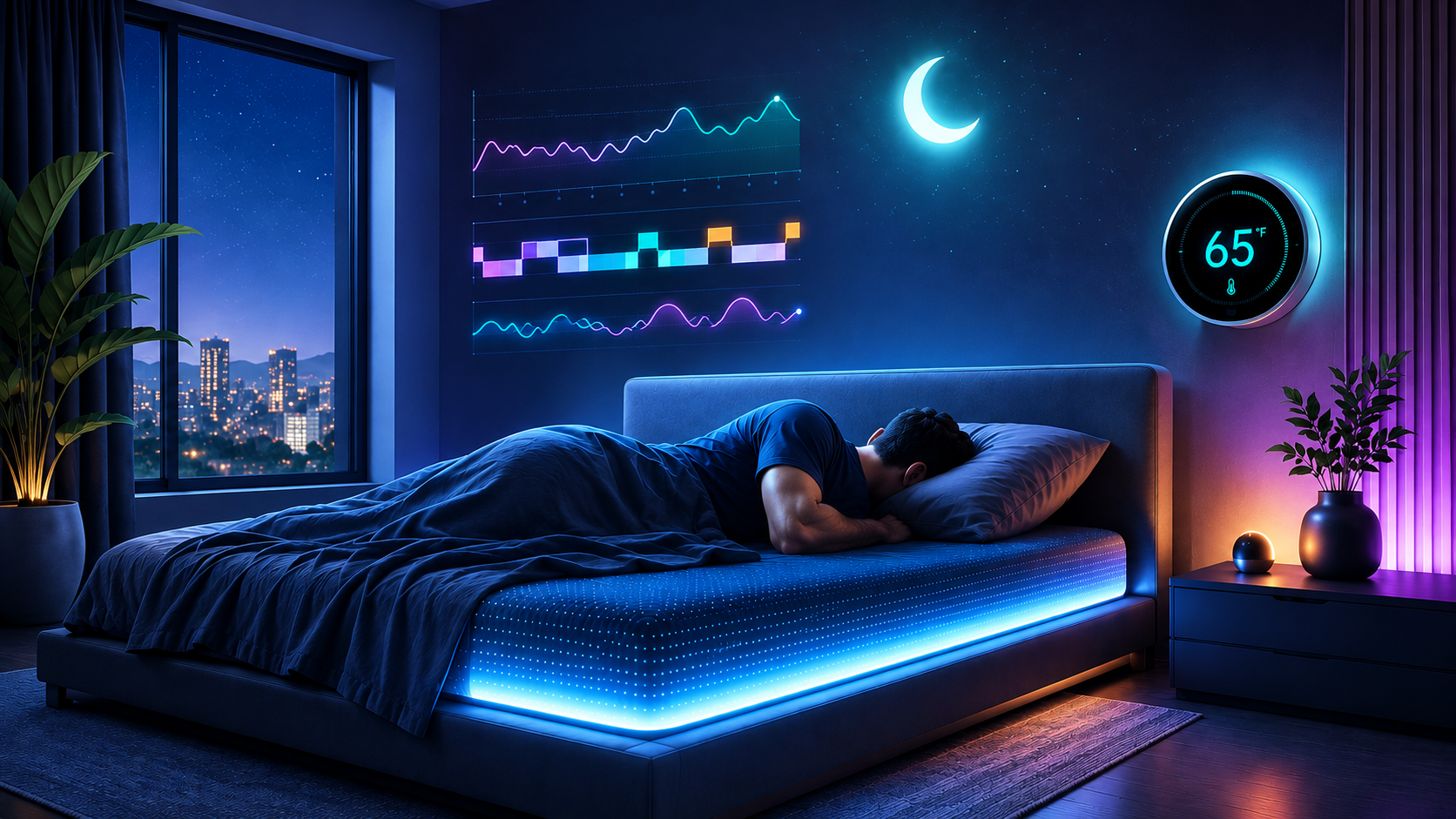
Sleep Temperature Optimization: The Science of Thermoregulation for Deeper Recovery

Sleep Temperature Optimization: The Science of Thermoregulation for Deeper Recovery

Sleep Temperature Optimization: The Science of Thermoregulation for Deeper Recovery

You’ve optimized your diet, dialed in your training, and even bought a blackout eye mask. But if your bedroom feels like a sauna or an icebox, you might be sabotaging your recovery without knowing it. Temperature is one of the most underrated variables in sleep science—and it directly impacts your muscle repair, hormone production, and next-day performance.

How Does Body Temperature Affect Sleep Onset and Quality?

Your body’s core temperature must drop by about 1°C (1.8°F) to initiate and maintain deep sleep.

This isn’t a random biological quirk. Research published in Nature Reviews Neuroscience explains that sleep onset is triggered by a natural drop in core body temperature, driven by the circadian rhythm. As evening approaches, your body dilates blood vessels in the skin (vasodilation) to radiate heat, cooling the core. If your environment is too warm, this heat dissipation is impaired, delaying sleep onset and reducing time spent in slow-wave sleep (the most restorative stage).

A study in the Journal of Physiological Anthropology found that sleeping in a warm room (30°C / 86°F) significantly decreased slow-wave sleep and increased wakefulness after sleep onset compared to a cooler room (20°C / 68°F). Conversely, sleeping in a cold room (16°C / 61°F) increased metabolic rate as the body worked to maintain core temperature, also disrupting sleep.

Practical action: Aim for a bedroom temperature between 65–68°F (18–20°C). This range supports the natural core temperature drop needed for deep sleep and optimal recovery.

What Is the Ideal Bedroom Temperature for Deep Sleep and Recovery?

The optimal bedroom temperature for most adults is 65–68°F (18–20°C), with individual variation of ±2°F.

This range is supported by the National Sleep Foundation and multiple sleep studies. However, individual factors like body composition, metabolism, and bedding can shift the sweet spot. For example, individuals with higher body fat percentages may tolerate cooler temperatures better, while leaner athletes might prefer the warmer end of the range.

Here’s how temperature affects different sleep stages:

Temperature Range Effect on Sleep Impact on Recovery
Below 60°F (15°C) Increased wakefulness, shivering, higher cortisol Impaired muscle repair, elevated stress response
60–65°F (15–18°C) Slightly cool, may require extra bedding Good for most, but may increase nighttime awakenings
65–68°F (18–20°C) Optimal for deep sleep initiation Maximizes slow-wave sleep, growth hormone release, HRV
68–72°F (20–22°C) Acceptable but suboptimal Reduced slow-wave sleep, slightly higher heart rate
Above 75°F (24°C) Significant sleep disruption Decreased REM, increased cortisol, poor recovery

Practical action: Use a programmable thermostat or a smart thermometer to keep your bedroom in the 65–68°F range. If you can’t control the whole room, focus on cooling your sleeping surface with a cooling mattress pad or breathable sheets.

How Does Temperature Influence HRV and Muscle Recovery During Sleep?

Optimal sleep temperature improves Heart Rate Variability (HRV) by lowering nighttime heart rate and promoting parasympathetic nervous system activity.

HRV is a marker of your autonomic nervous system balance. Higher HRV indicates better recovery and readiness. A study in the European Journal of Applied Physiology found that sleeping in a cool environment (20°C) increased HRV compared to a warm environment (30°C). The cool condition also reduced nighttime cortisol levels, which is critical for muscle protein synthesis (MPS).

Muscle repair happens predominantly during slow-wave sleep, when growth hormone secretion peaks. If your core temperature doesn’t drop sufficiently, you spend less time in slow-wave sleep, directly reducing the time available for MPS. A paper in Sports Medicine highlighted that even a 1°C elevation in core temperature during sleep can attenuate growth hormone release by up to 20%.

Practical action: Track your HRV with a wearable (like the DEEP app’s integration) and note how your sleep temperature correlates with your morning HRV readings. If you see low HRV after warm nights, prioritize cooling strategies.

What Are the Best Science-Backed Strategies to Cool Your Body for Sleep?

The most effective strategies combine passive cooling (environment) and active cooling (pre-sleep rituals) to lower core temperature by 0.5–1°C before bedtime.

Here’s a comparison of popular methods based on research:

Strategy Mechanism Evidence Effectiveness
Cool shower/bath (20–25°C) 60–90 min before bed Promotes vasodilation and heat loss after initial cooling Sleep Medicine Reviews: reduces sleep onset latency by 10–15 minutes High
Cooling mattress pad Direct conductive cooling of the sleeping surface Journal of Sleep Research: increases slow-wave sleep by 15% Very high
Breathable bedding (bamboo, linen) Improves evaporative cooling Textile Research Journal: reduces skin temperature by 0.3–0.5°C Moderate
Cold water bottle / ice pack on feet Feet are efficient heat radiators; cooling them lowers core temp Anecdotal + thermoregulation physiology Moderate
Warm bath (40°C) 1–2 hours before bed Induces rapid core temperature drop after exiting Sleep Medicine Reviews: similar to cool shower but delayed effect High (if timed right)

Practical action: Take a warm bath 90 minutes before bed, or a cool shower 60 minutes before. Pair this with a cooling mattress pad or a fan directed at your feet. Avoid intense exercise within 2 hours of bedtime, as it raises core temperature.

Can Sleeping Too Cold Harm Your Recovery?

Yes, extreme cold (below 60°F / 15°C) can increase cortisol and disrupt sleep, impairing recovery.

While mild coolness helps, excessive cold triggers a stress response. Your body increases metabolic heat production through shivering and non-shivering thermogenesis, which elevates heart rate and cortisol. A study in Physiology & Behavior showed that sleeping in 12°C (54°F) increased nighttime cortisol by 30% and reduced total sleep time by 20%.

Furthermore, cold exposure can constrict peripheral blood vessels, reducing blood flow to muscles during sleep—a period when blood flow normally increases to support repair. This can blunt the delivery of oxygen and nutrients to recovering tissues.

Practical action: If your room is below 60°F, add a layer of clothing or a light blanket. Focus on keeping your core warm while allowing your extremities (hands and feet) to remain cool—this balance supports optimal thermoregulation.

How Does Alcohol Disrupt Body Temperature Regulation During Sleep?

Alcohol suppresses the body’s natural temperature regulation, causing a false initial warmth followed by a sharp drop that fragments sleep.

Alcohol is a vasodilator—it makes you feel warm by increasing blood flow to the skin. However, this disrupts the normal circadian drop in core temperature. A study in Alcohol found that alcohol consumption before bed elevated core temperature during the first half of the night and then caused a rebound drop in the second half. This temperature instability leads to more awakenings, reduced REM sleep, and lower HRV.

The effect is dose-dependent. Even one drink can reduce slow-wave sleep by 20–30%, and two or more drinks significantly increase sleep fragmentation. This is why you might fall asleep quickly after drinking but wake up feeling unrefreshed.

Practical action: Avoid alcohol within 3 hours of bedtime. If you do drink, pair each alcoholic beverage with a glass of water and keep your bedroom slightly cooler (65°F) to counteract the vasodilation effects.

What Role Does Hydration Play in Sleep Temperature Regulation?

Dehydration impairs the body’s ability to regulate temperature, making it harder to cool down for sleep.

Water is essential for thermoregulation through sweating and blood flow. Even mild dehydration (1–2% body weight loss) reduces the body’s ability to dissipate heat. A study in the Journal of Sleep Research found that dehydrated individuals had higher core temperatures during sleep and lower sleep efficiency.

Conversely, drinking too much water right before bed can cause nocturia (nighttime urination), which disrupts sleep. The key is timing: hydrate well during the day, and taper off 1–2 hours before bed.

Practical action: Drink 2–3 liters of water throughout the day, but stop drinking fluids 90 minutes before bed. If you wake up thirsty, keep a small glass of water by your bed—but sip, don’t gulp.

How Can You Use the DEEP App to Optimize Your Sleep Temperature?

The DEEP app’s AI health coach can help you personalize your sleep environment based on your HRV, sleep stages, and recovery scores.

By logging your bedroom temperature, pre-sleep rituals, and morning readiness, the app identifies patterns that affect your recovery. For example, you might discover that your HRV is consistently lower on nights when the room is above 70°F. The app can then suggest targeted adjustments, such as using a cooling mattress pad or adjusting your thermostat.

DEEP also tracks your sleep stages automatically (using your phone or wearable), so you can see how temperature changes affect your slow-wave and REM sleep duration. Over time, the AI learns your optimal temperature range and sends reminders to cool your room before bed.

Practical action: Start by logging your bedroom temperature and your morning HRV in DEEP for one week. Look for correlations and adjust your environment accordingly. Small changes—like lowering the thermostat by 2°F—can yield measurable improvements in recovery.

Key Takeaways for Sleep Temperature Optimization

Your sleep environment is a lever you can pull tonight. Science shows that even a 1°C temperature difference can shift your recovery trajectory. Optimize your bedroom temperature, and your muscles—and your morning HRV—will thank you.

Ready to take your recovery to the next level? Download DEEP for free on the App Store and let our AI coach guide you to better sleep, faster recovery, and smarter training.