The Ultimate Guide to Sleep Stages: How Each Phase Fuels Your Recovery & Performance
April 20, 2026 · DEEP Team · 5 min read
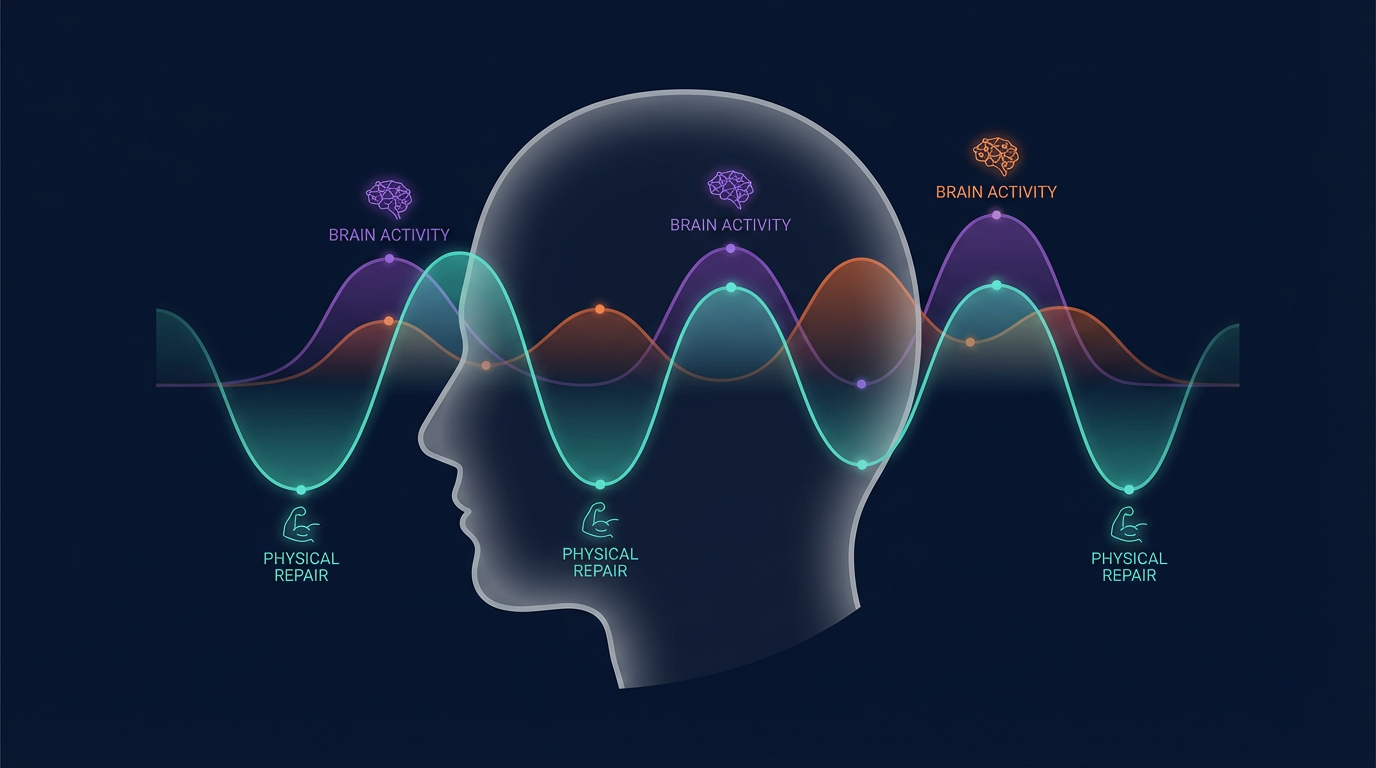
We often talk about sleep as a single, monolithic state—you’re either asleep or you’re not. But the reality is far more fascinating. Sleep is a complex, cyclical journey through distinct stages, each with a unique and vital role in physical repair, cognitive function, and emotional regulation. Understanding these stages—your sleep architecture—is the key to unlocking truly restorative rest and maximizing your recovery and performance.
Think of it like a workout split for your brain and body. Just as you wouldn’t only train your biceps, you don’t want to miss out on any critical stage of sleep. This guide will demystify what happens in each phase, explain why they’re non-negotiable for your fitness goals, and provide science-backed strategies to improve your sleep architecture for better recovery, muscle growth, and mental sharpness.
What Are the Different Stages of Sleep?
Sleep is divided into two main types: Non-Rapid Eye Movement (NREM) sleep, which has three stages (N1, N2, N3), and Rapid Eye Movement (REM) sleep. Throughout the night, you cycle through these stages approximately every 90 minutes, with the composition of each cycle changing as the night progresses. Early cycles contain more deep NREM sleep, while later cycles are dominated by REM sleep.
Here’s a breakdown of a typical sleep cycle:
| Stage | Type | Typical % of Night | Key Characteristics & Functions |
|---|---|---|---|
| N1 | Light NREM | 5-10% | Transition from wakefulness to sleep. Muscles relax, heart rate slows. Easy to wake. |
| N2 | Light NREM | 45-55% | Body temperature drops, brain activity slows with sleep spindles & K-complexes. Crucial for memory consolidation and learning. |
| N3 | Deep NREM | 15-25% | "Slow-wave sleep." Hardest to wake from. Essential for physical recovery, hormone release (growth hormone), and immune function. |
| REM | REM Sleep | 20-25% | Brain activity resembles wakefulness. Vivid dreams occur. Muscles are paralyzed. Critical for emotional processing, memory, and creativity. |
How Does Deep Sleep (N3) Directly Support Muscle Growth and Repair?
Deep sleep, or slow-wave sleep (N3), is the prime time for physical restoration, directly stimulating muscle repair, bone building, and immune strengthening through hormonal signaling and cellular processes.
During N3, your brain waves slow to a delta wave pattern, and your body enters its most anabolic (building) state. This is when the pituitary gland releases a pulse of human growth hormone (HGH), which is essential for tissue growth and muscle repair. A study in the Journal of Applied Physiology found that sleep, particularly deep sleep, is a potent stimulator of HGH secretion, which aids in protein synthesis and the repair of micro-tears caused by exercise.
Furthermore, blood flow to muscles increases during deep sleep, delivering oxygen and nutrients while removing metabolic waste. This stage is also when the body prioritizes energy restoration, replenishing glycogen stores in your muscles and liver for your next workout. Skimping on deep sleep can blunt these recovery processes, leaving you feeling sore, fatigued, and prone to injury. Using a tool like the DEEP app’s sleep tracker can help you monitor your time in deep sleep and identify lifestyle factors that may be enhancing or inhibiting this critical phase.
Why Is REM Sleep Crucial for Cognitive Recovery and Mental Performance?
REM sleep is essential for cognitive functions like memory consolidation, emotional regulation, and learning, acting as a nightly therapy and optimization session for your brain.
While your body is still in REM sleep, your brain is highly active, processing and integrating the day’s experiences. Research published in Science highlights the role of REM in synaptic homeostasis—pruning unimportant neural connections and strengthening important ones, which is fundamental for learning and memory.
For athletes and anyone with a demanding mental schedule, REM sleep is where procedural memory ("how-to" skills like a golf swing or a piano piece) and emotional memories are processed. It helps you solidify new skills learned in training and regulates stress hormones like cortisol. Lack of REM sleep is linked to poor focus, impaired judgment, increased emotional reactivity, and reduced problem-solving ability. In essence, without sufficient REM, you won’t perform at your cognitive best, no matter how physically recovered you are.
What Disrupts Our Sleep Cycles and Reduces Time in Key Stages?
Common disruptors of sleep architecture include alcohol consumption, caffeine or large meals too close to bedtime, inconsistent sleep schedules, blue light exposure, high stress, and untreated sleep disorders like sleep apnea.
These factors can fragment your sleep, causing more frequent awakenings and altering the natural progression through cycles. For example:
- Alcohol: While it may induce sleep initially, it severely suppresses REM sleep in the first half of the night and can lead to restless, fragmented sleep later.
- Blue Light: Evening exposure from screens can suppress melatonin production, delaying sleep onset and potentially reducing deep sleep.
- Inconsistent Schedule: Going to bed at wildly different times confuses your circadian rhythm, making it harder to achieve sustained, high-quality sleep cycles.
- Sleep Apnea: This disorder causes repeated breathing interruptions, pulling you out of deep sleep hundreds of times a night, severely impairing physical recovery.
How Can You Improve Your Sleep Architecture for Better Recovery?
You can improve your sleep architecture by prioritizing sleep consistency, optimizing your sleep environment, managing evening nutrition, and leveraging strategic daytime habits.
Actionable strategies based on sleep science include:
- Anchor Your Circadian Rhythm: Wake up at the same time every day, even on weekends. Get bright light exposure (preferably sunlight) within 30 minutes of waking.
- Create a True Wind-Down Routine: 60-90 minutes before bed, dim lights and avoid screens. Engage in calming activities like reading, light stretching, or meditation. The DEEP app’s mindfulness resources can guide you here.
- Optimize Your Environment: Keep your bedroom cool (around 65°F or 18°C), dark, and quiet. Consider blackout curtains and a white noise machine.
- Be Smart About Evening Intake: Finish caffeine 8-10 hours before bedtime. Avoid alcohol as a sleep aid. Have your last large meal 2-3 hours before bed.
- Track and Refine: Use a detailed sleep tracker to understand your personal patterns. The DEEP app goes beyond simple duration, helping you see the balance of your sleep stages (light, deep, REM) over time, so you can connect the dots between your daily habits and your sleep quality.
The Bottom Line on Sleep Stages
Sleep is not a passive state but an active, structured process where different stages handle specific repair jobs. Deep sleep (N3) is your body's chief physical repair technician, while REM sleep is your brain's master optimizer and emotional regulator. Disrupting this architecture through poor habits can undermine your fitness results, cognitive performance, and overall health.
By understanding the purpose of each stage and implementing the science-backed strategies outlined above, you can take proactive control of your sleep quality. Think of it as the most fundamental form of biohacking—optimizing your body's natural recovery system.
Ready to dive deeper into your personal sleep architecture and recovery metrics? Download DEEP for free on the App Store. Track your sleep stages, monitor your Heart Rate Variability (HRV), and get actionable insights from your AI health coach to optimize your recovery and performance, all in one place.